Dairy Property & Buildings for working dairies
All-risk property coverage for the dairy complex — freestall barns, milking parlors, commodity sheds, bunker and commodity silos, and feed storage — built for livestock and manure exposures and scheduled at replacement cost.
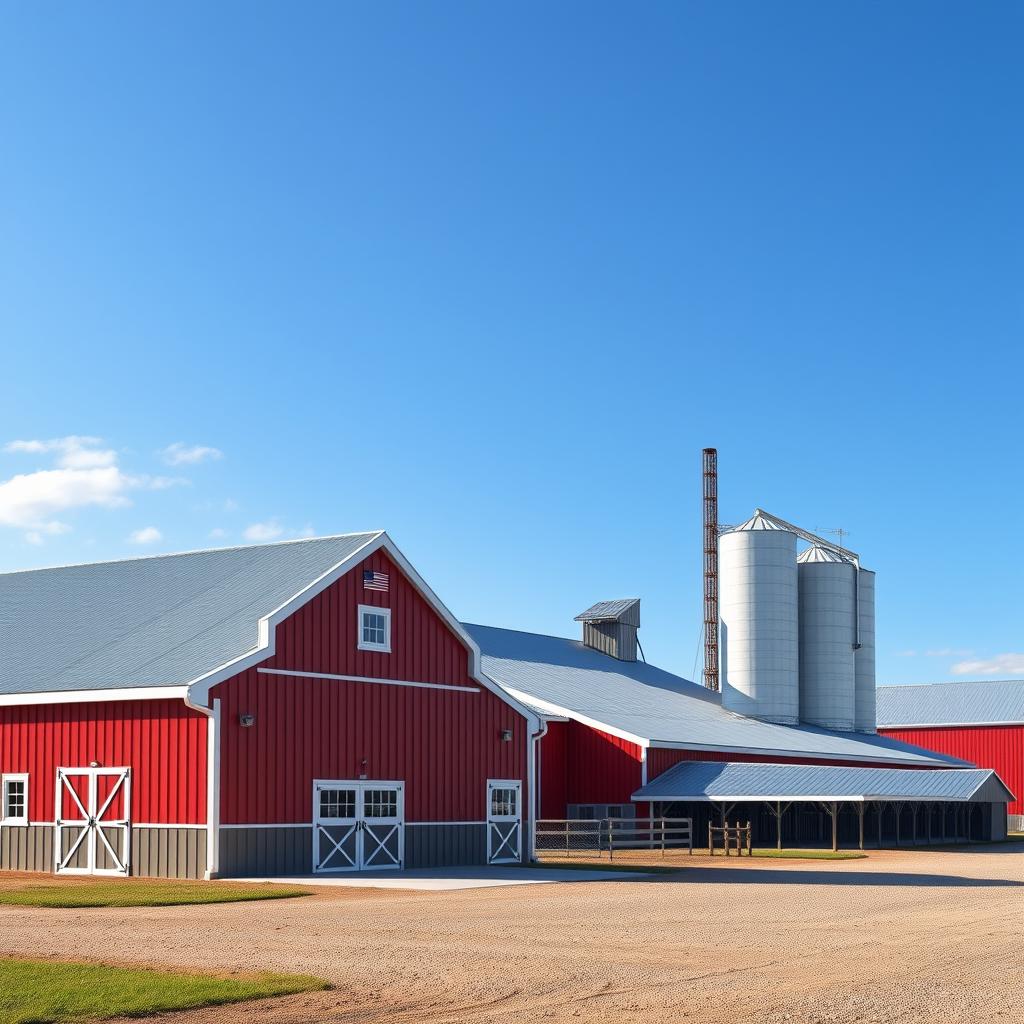
What it covers
- Freestall and tiestall barns, parlors, and holding areas
- Commodity sheds, bunkers, and commodity and bunker silos
- Feed storage structures and the feed and inventory inside them
- Shop, equipment, and outbuildings
- Business interruption during restoration after a covered loss
- Debris removal and rebuild after a barn fire
Who it's for
- Dairies with significant investment in barns and parlor infrastructure
- Operations with large feed and commodity storage
- Dairies in wildfire, windstorm, or lightning-exposed regions
- Any dairy whose property is scheduled at actual cash value with depreciation
Why CCA
- Buildings and equipment scheduled at replacement cost — not ACV
- Livestock and manure exposure reflected in the underwriting — not a generic farm form
- Business interruption with a restoration period that fits specialty-equipment lead times
Common questions about dairy property & buildings
ACV pays today's depreciated value. A 20-year-old parlor valued at ACV might receive a fraction of its rebuild cost. For dairy infrastructure with long lead times, ACV leaves you dramatically underinsured after a fire.
Yes — fire is a covered peril. The key add-ons are replacement cost (not ACV), debris removal, and business interruption with a restoration period that accounts for the time it takes to rebuild a parlor and restock.
Yes — feed inventory and the silos and commodity structures that hold it are scheduled under the property program. We value feed at its replacement cost so a spoiled or destroyed inventory doesn't become an uncovered loss.
It can. Livestock confinement and manure handling change the fire-loading and liability profile of a property. We document your housekeeping and handling so underwriters rate the real exposure — not a worst-case assumption.
Business interruption coverage replaces lost income during the restoration period. Because rebuilding a parlor and restocking takes time, we set a restoration period that fits dairy reality, not a generic 6-month default.
Cost is driven by herd size and value, parlor and equipment value, payroll, feed inventory, and loss history. We quote your actual operation in about 15 minutes — never a ballpark from a generic farm form.
Yes. Contractors Choice Agency is licensed in all 50 states and writes dairy programs nationwide — Wisconsin, California, the Northeast, Pacific Northwest, Southwest, and everywhere dairy operates.
Typically 15 minutes on a call. Larger or higher-value programs may take a day or two to place with the right markets, but we move fast and set expectations up front.
Often yes. We have admitted and E&S markets for dairies declined over manure exposure, prior loss runs, OSHA citations, or other issues. Bring us your situation and we'll find a market.
Usually yes. A coordinated program closes gaps between policies and is typically cheaper than separate policies from separate carriers — and far easier to manage at claim time.
A.M. Best ratings reflect a carrier's financial strength and ability to pay claims. We place coverage with A-rated (and A.M. Best A+ where possible) carriers so the coverage is there when a barn fire, bulk-tank failure, or pollution claim hits.
Yes. Organic herds carry premium stock and feed value; pasture-based and seasonal dairies have different equipment and labor profiles; raw-milk and direct-market operations carry added product-liability exposure. We tailor each program accordingly.
Registered, show, and high-genetic animals are scheduled individually at their real value — not a flat grade-cattle rate. Proper individual scheduling is what ensures a mortality claim pays what the animal was actually worth.
Herd size and breakdown, animal values (especially registered stock), parlor type and milking system, equipment list and values, acreage and feed inventory, payroll and crew size, current coverage, and loss history. The more detail, the more accurate the quote.
It can, with the right endorsement. Hosting tours, petting zoos, or events adds visitor-liability exposure that standard policies under-cover. Tell us if the public visits and we'll add agri-tourism liability.
Yes. Seasonal calving and grazing dairies have different feed, labor, and equipment patterns — and often lower confinement exposures. We reflect how you actually run the herd in the rating and coverage, not a generic confinement-dairy code.
Livestock claims are paid against records. Incomplete ID, breed, or value records mean delays and reduced payments. We help you document the herd properly up front so a claim is settled quickly and fully.
Yes. If you milk at multiple sites, raise heifers off-site, or lease acreage, we build one coordinated program covering owned, leased, and custom operations with no gaps.
Yes. If you bottle, make cheese, butter, or other products, or run a creamery, we add product liability, equipment breakdown, and property coverage specific to processing — beyond a standard farm policy.
Pair it with related coverage
Ready to protect your dairy operation?
Get a 15-minute quote from specialists who understand milking operations — livestock mortality, parlors, bulk tanks and chillers, and manure exposure.